By practice/Dentists

HIPAA limits what a covered dental practice can say in a reply. It doesn't decide which Google reviews come down.

Reviewed by Doug Baker, founder · Updated September 23, 2026 · Policy text snapshot August 2026

Illustration: a street with a dental practice under a green awning; in its doorway the dentist in a white clinical tunic and her office manager in a cardigan stand with empty hands. Six people post a one-star review from a phone. Five of the review cards are drawn in red and labelled with what breaks a Google policy: No genuine experience, a young man in a gray hooded sweatshirt standing well away from the others; Hygienist's street, a woman in a plain coat a step from the doorway; Former employee, a young woman with a cardboard box of belongings; Threatens staff, a man in a dark jacket squared up; Not about the visit, a man with car keys beside a parking meter. At the far right, apart, an older patient with a handbag posts a one-star review drawn in plain gray, labelled Long wait.
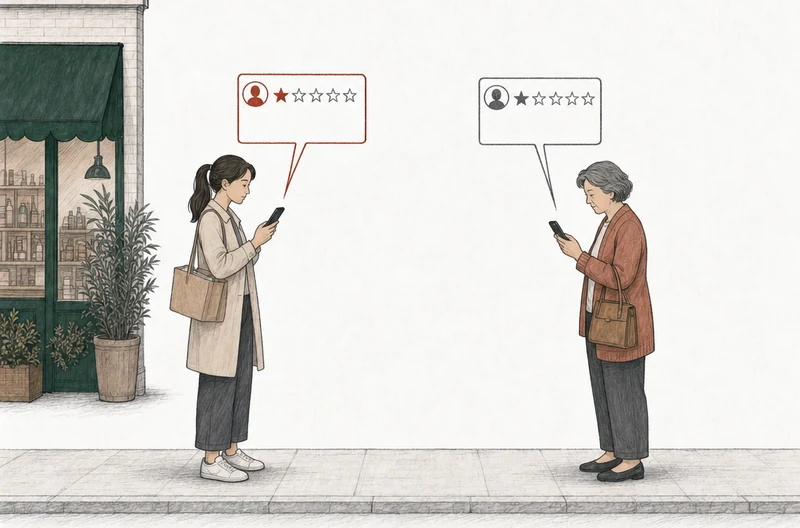
Illustration: two people on the pavement, each posting a one-star review from a phone. At the left, by the practice's green awning, a woman in a plain coat; her review card is drawn in red. At the right, apart from her, an older patient with a handbag; her review card is drawn in plain gray. Labels: Hygienist's street, Long wait.

The dentist and her office manager, in the doorway. HIPAA covers their reply. Google's policies cover the reviews, and a real patient's one-star about a long wait stays up.

HIPAA covers the practice's reply. Google's policies cover the reviews. Posting the hygienist's street can break one. A long wait doesn't.

A patient left a one-star about their visit. The reply you'd want to write is the one reply you can't post. HIPAA controls that reply. It has nothing to say about whether the review stays up, because Google decides that with its own policies. Google doesn't remove reviews because you're not allowed to answer them. It removes them when a review breaks one of its policies. Some bad reviews do. Most don't, and we'll tell you which is which.

Have us analyze it

Which of your bad reviews have grounds for removal?

Put in the practice name and we'll analyze every bad review on the profile against Google's policies. By bad we mean reviews of 2 stars and below with at least ten characters of text. You get a verdict on each one, free. We don't need your email, and we don't need anything from your practice software.

No email. No account. The answer is free either way.

Each review comes back with one of three:

Strong grounds for removalPossible grounds for removalNo grounds for removal

The shop owner sits at a table inside the shop after closing, reading her phone. Above the shop floats a row of six review cards: four with five gold stars, two one-star cards drawn in red.

Does yours break a policy?

Does HIPAA stop Google from removing a dental review?

No. HIPAA and Google's review policies are two separate sets of rules, and they look at two different things. The HIPAA Privacy Rule applies to covered entities and their business associates, and it limits what they disclose about patients (45 CFR 164.502(a)). It says nothing about what a patient may post. Google looks at the review itself and asks one question. Does it break a policy?

So both can be true at once. A review you can't answer can still break a Google policy. A review you can't answer can also break nothing, and then it stays up. Google is plain about that second case. It doesn't step into disagreements between a business and its customers, and it asks owners not to report a review just because they dislike it (Google Business Profile Help).

Which dental reviews break Google's policies?

Most bad reviews don't. When one does, it breaks one of Google's policies, and five of them are below, each with what it looks like on a dental profile. The general question, whether your practice's reviews have grounds for removal, has its own page.

Off-topic. A review has to be about an experience at your practice. A one-star that's all about the shared parking garage and the building's management, with no appointment in it, falls under this policy.

Personal information. For a dental practice this one cuts both ways. A review that gives your hygienist's full name falls under it. A review that names you usually doesn't. Google allows the name of a professional who does business under that name, and doctors are the first example on its list. There's more on personal information in Google reviews, including both carve-outs.

Harassment. A review that names someone on your staff and threatens them falls under Google's Harassment policy. Anger alone doesn't.

Conflict of interest. Google's Rating Manipulation policy covers reviews based on a conflict of interest, and it names former employment. A one-star from someone who left your front desk three weeks earlier fits that pattern. Google's Misrepresentation section repeats the conflict-of-interest rule in shorter form, so two sections apply.

Fake Engagement. This covers reviews that aren't based on a real experience, and it's where "they were never a patient" belongs. But we don't prepare an appeal on "never a patient" alone. So the appeal argues Fake Engagement or Off-topic and points to what your records show. That's as far as you can go. You can't know who wrote the review, and an honest appeal doesn't pretend to.

Two similar reviews. One breaks the policy.

Same wait, same rushed cleaning, same one star. One names the hygienist and her street. The other names the dentist. Both are invented.

Breaks the policy

Dana K.
Strong grounds for removal
★★★★sample

Waited 40 minutes past my appointment time. Then my neighbor Jenna Morales, the hygienist who lives on Alder Court, rushed my cleaning and didn't answer a single question. Never coming back.

Personal informationHygienist's street

The review posts a staff member's full name and the street she lives on. Google's Personal information policy covers information about an identifiable person that could put them at risk if misused, and a full name is its first example.

Doesn't break it

Mark T.
No grounds for removal
★★★★sample

Waited 40 minutes past my appointment time. Then Dr. Patel rushed my cleaning and didn't answer a single question. Never coming back.

Does not coverUnder her own name

Dr. Patel is the dentist, a public-facing professional practicing under her own name, and Google's carve-out allows that. The rest describes a bad visit in plain terms, and Google allows negative experiences described respectfully.

The reply

What can a dentist say in a reply to a Google review?

Only generalities, and nothing that confirms the person was your patient. HHS has been direct about this. When it announced a December 2022 settlement, the director of its Office for Civil Rights said, "Providers cannot disclose protected health information of their patients when responding to negative online reviews. This is a clear NO."

That settlement was with a California dental practice. It paid $23,000 over protected health information disclosed in replies to online reviews (HHS's 2022 settlement). In October 2019 a Dallas dental practice paid $10,000 over disclosures of patients' protected health information on social media (HHS's 2019 agreement). HHS announced both. Neither one predicts what happens to you.

The ADA's guidance on online reviews goes further. It says generalities are best when you reply to any review, positive or negative. It also warns that a reply that does nothing more than confirm someone was a patient can bring a fine.

Plenty of dentists have run into this. The ADA Health Policy Institute ran an opt-in panel poll in December 2022. Of the 1,003 responding dentists who had received an online review, 39% said HIPAA had at some point kept them from responding to one (ADA HPI).

This page isn't legal advice. Your practice's reply policy is for your own counsel to decide.

When there are no grounds

What if none of your dental reviews break a policy?

Then you get a reply playbook instead, free. Most bad reviews don't break any policy. Google's Offensive content policy allows reviews that describe a negative experience respectfully. So a real patient's one-star about a long wait stays up, however much it stings. About six in ten profiles we analyze have no review with grounds for removal. We say so plainly, with a reply playbook attached. Our numbers show the count, and our methodology shows how we measured it.

The playbook gives you a reply draft for every review of 2 stars and below on the practice's profile. The ones with at least ten characters of text also come with their verdict and a one-line note that we found no policy violation. For a health practice, we write the drafts never to confirm that the reviewer was a patient. We also write them not to mention the visit or the treatment, even details the review itself gives. You edit the draft and you post it. We don't post anything.

The reply waits until the verdict is in. We settle whether a review has grounds before the practice posts anything, in case an early reply hurts the appeal.

  1. Verdict

    We settle whether the review has grounds first.

  2. Reply last

    A draft in your voice, for you to edit and post.

The playbook's order. Drawn by us, not a screenshot of Google.
No grounds for removal

When there are no grounds, that's the answer. Also free. I'd rather tell you no for free than take a fee for an appeal that fails.

When there are grounds

What happens when a dental review has grounds for removal?

We prepare your appeal and you file it from your own Google profile. Google's process leaves the filing to the owner, so nothing goes to Google from us, and nobody here logs in to the practice's account.

Take Dana K.'s review from the pair above. It posts your hygienist's full name and the street she lives on, so the argument is Personal information. When you report it, Google asks you to pick a reason. Its help page gives only two examples, Spam and Profanity, so we can't tell you how the rest of the list reads. Choose the one nearest to Personal information, because that's what the hygienist's name and street point to. Google says evaluation usually takes several days.

If Google keeps Dana K.'s review up after the report, you can appeal. Google allows one appeal per review, ever. Our read is that the policy named has to match the argument. So Dana K.'s appeal names Personal information and quotes the review's own words, her full name and her street. Name the wrong policy and you've used your one appeal on the wrong argument. So the filing is the whole job. The full sequence is in Google review removal, start to finish, and our part is in how the analysis and the appeal work.

Jenna Morales is a hygienist on your staff. She works for the practice, not under her own name, so Google's allowance for professionals doing business under their names doesn't cover her. None of that comes from a patient record, and none of it says whether Dana K. was ever a patient. It doesn't have to. The appeal argues about what the review posts, not who posted it.

  1. Report

    You can report any review. Google's rules only allow removal of one that breaks a policy.

  2. Several days

    Google says evaluation usually takes that long.

  3. One appeal

    If Google leaves the review up, you get one appeal, ever. Our read is that the policy named has to match the argument.

The report, then the one appeal. Drawn by us, not a screenshot of Google.

Some reviews have possible grounds rather than strong ones. That means the evidence is thinner. We tell you so before the practice pays for anything, since appeals like this sometimes succeed, not usually.

The appeal fee is $149 for one review, or $199 for every review with grounds from that analysis. Both prices are per Business Profile, and the details are in what an appeal costs, in print. The review gets removed, or your fee gets refunded. The $199 order covers every review with grounds. It works differently. If Google removes none of these reviews, the $199 is refunded. The appeal fee only, never subscriptions. You can read the refund terms, in plain English. A verdict is our reading of Google's written policies. It doesn't forecast Google's decision, and we publish how the analysis was measured on the pilot.

What does one removal do to a dental practice's rating?

That depends on how many reviews you have. Take a sample profile with 60 reviews totaling 258 stars. That averages 4.3. If two 1-star reviews with grounds come down, the remaining 58 total 256 stars. That averages 4.41, which rounds to 4.4. This is arithmetic on a sample, not a forecast for your profile. It also assumes Google removes both reviews, and only Google decides that. The general case is in how removal moves a rating.

Check it yourself

Google's wording, unedited

Google's policy text. Source: Google Maps user-contributed content policy and Report inappropriate reviews on your Business Profile.

Personal information

Content which contains personal information of another posted without their consent such as: full name, or last name, their face in a photograph or a video, or other information which has been reported as having been posted without consent.

The rest of the extract

We also allow

An individual’s name if they are a public-facing professional conducting business under their name.

This includes:

Doctors, lawyers, realtors, financial planners, contractors and others professionals doing business under their names

Google, Maps user-generated content policy, Prohibited & restricted content, section Personal information

Off-topic

Only post content that is based on your experience or questions about experiences at a specific location.

Google, Maps user-generated content policy, Prohibited & restricted content, section Off-topic

Harassment

Content that contains a specific threat of harm against individuals or defined groups of people that would make a reasonable person fear for their mental or physical safety or well being.

Google, Maps user-generated content policy, Prohibited & restricted content, section Harassment

Rating Manipulation

Content that is based on a conflict of interest. A conflict of interest may include current or former employment, a contractual or consultory relationship, or other professional or personal affiliations that demonstrate a conflict of interest (such as industry competitors, familial relationships, etc.).

The rest of the extract

Offer incentives – such as payment, discounts, free goods and/or services - in exchange for posting any review or revision or removal of a negative review.

Google, Maps user-generated content policy, Prohibited & restricted content, section Rating Manipulation

Fake Engagement

Content that is not based on a real experience or does not accurately represent the location or product in question.

Google, Maps user-generated content policy, Prohibited & restricted content, section Fake Engagement

Offensive content

We do allow content that describes negative experiences in a respectful manner.

Google, Maps user-generated content policy, Prohibited & restricted content, section Offensive content

Reporting a review

You can report any review, but only those that violate Google policies are eligible for removal.

The rest of the extract

Do not report a review just because you disagree with it or dislike it. Google doesn’t get involved in conflict between businesses and customers.

Review evaluation typically takes several days.

If a flagged review doesn’t qualify for removal, submit a one-time appeal.

Google Business Profile Help, Report inappropriate reviews on your Business Profile

Google's policy and help text captured August 4, 2026. Policy section headings re-checked against the live page September 3, 2026.

Common questions

  • Do you need anything from our patient records?

    Not to analyze your reviews. The analysis reads only what's public on the practice's Google Business Profile. If an appeal calls for a search of your patient records for the reviewer's name, someone at the practice runs it in your practice management system, and nothing from those records comes to us.

  • Can we ask a patient to take a review down?

    You can't offer anything in return. Google's Rating Manipulation policy bars businesses from offering payment, discounts, or free services to get a negative review removed.

  • Can we turn off Google reviews for the practice?

    Google decides which reviews stay on your profile, and it decides by its policies. There's a separate page on whether Google reviews can be turned off that covers what you can and can't do.

  • A bad review just landed. What do we do first?

    Find out whether it has grounds before you reply. We put the reply last, in case an early reply works against the appeal. If you want the order laid out, see a bad Google review, step by step.

  • Can you tell us when a new bad review comes in?

    Yes, if you add Monitoring, $39 a month per Business Profile. It minds the practice's profile for new reviews of 2 stars and below with at least ten characters of text. The alert arrives with the verdict already attached, so you don't hear about a review first from a patient in the chair.

RatingMinder