Guides/The policy reference
Google review policies. What violates them, and what doesn't.
Reviewed by Doug Baker, founder · Updated September 23, 2026 · Policy text snapshot August 2026

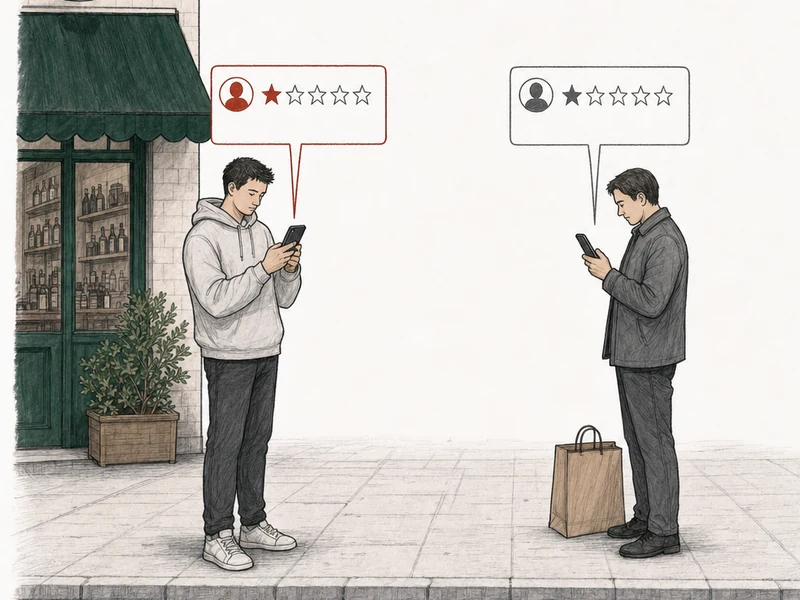
Five of these break a Google policy. The gray one is honest, so it stays.
One breaks a Google policy. The other is honest, so it stays.
Google's review policies are the rules every review on Maps has to follow, and Google removes a review when its content breaks one of them. Most bad reviews don't break any. Each red card in the picture breaks a different rule. One isn't based on any real experience, one came from a competitor, one threatens staff, one posts a staff member's medical details, and one is about a different business. The gray card is a customer who waited too long and said so. That one stays up, and it should. Google doesn't remove reviews on "unfair." It removes them on policy.
The policies
What are Google's review policies?
They're one document, Google's Maps user-generated content policy. The part that matters to an owner is the page called Prohibited & restricted content. If you've heard it called Google's review guidelines, this is that page. It binds both sides. The person writing the review has to follow it, and so does the business being reviewed. That's why there's a section further down on what it asks of you.
The policy doesn't ask whether a review is fair. It lists the kinds of content Google won't allow, and a review either has one of them or it doesn't.

Google's help page for owners says it in one line:
You can report any review, but only those that violate Google policies are eligible for removal.
The rest of the extract
Flagged reviews that violate our content policies are removed and will no longer show on Maps and Search. Learn more about prohibited and restricted content.
Google Business Profile Help, Report inappropriate reviews on your Business Profile
So you can report anything you like. But when you report a review, Google only takes it down if it breaks a policy.
What violates Google's review policies?
Each of these ten policies has its own page, and each card below opens one. Start with your complaint. If the review isn't based on any real experience of your business, open Fake Engagement. If it came from a competitor, a family member, a former employee, or someone else with a professional or personal tie to you, open Conflict of interest. We also have a separate guide on former-employee reviews. If it threatens you or your staff, open Harassment. If it's about politics, the news, or some other business, open Off-topic.
Two of the names are ours, not Google's. Spam pulls clauses from three of Google's sections. Advertising & solicitation is one, and Unclear and Repetitive Content is another. The third is two clauses under Fake Engagement, one about a person posting from several accounts and one about posts faked from a tampered device. Conflict of interest is a clause Google prints in two sections, Rating Manipulation and Misrepresentation. The Rating Manipulation version is the one that names competitors and family. We gave it its own page so it's easy to find.

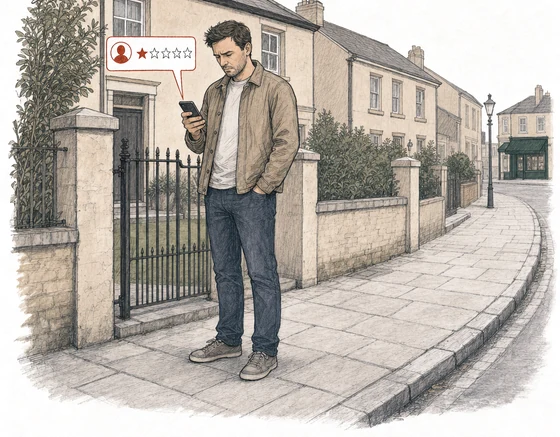


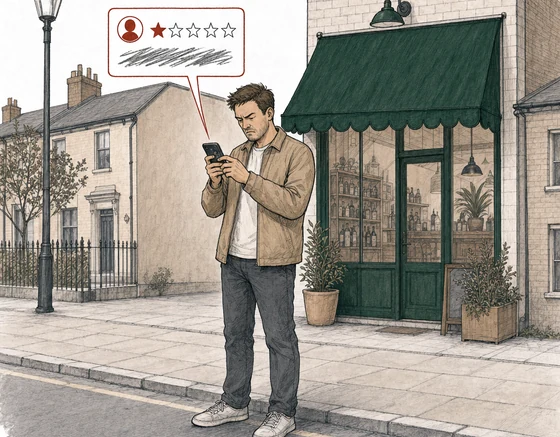
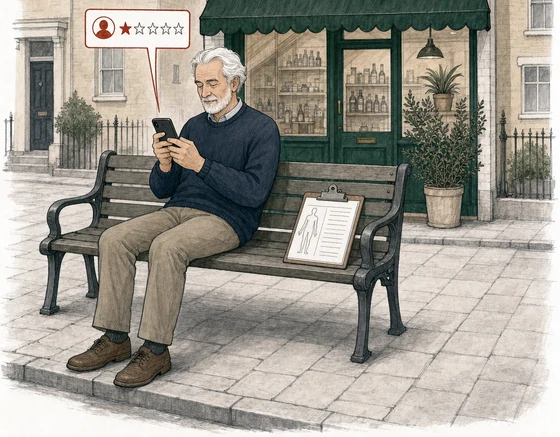

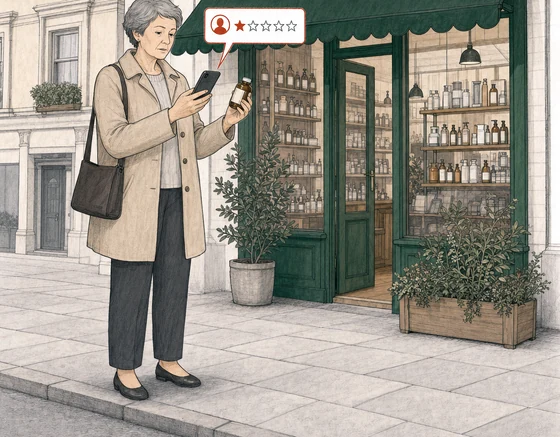
Does yours break one?
What is not a Google review policy violation?
A real customer describing a bad experience isn't breaking a rule.
Google allows negative experiences told respectfully, and it tells owners in plain words not to report a review just because they don't like it:
Do not report a review just because you disagree with it or dislike it.
The rest of the extract
Google doesn’t get involved in conflict between businesses and customers. Negative reviews can highlight areas for improvement and aren’t always a sign of poor service.
Google Business Profile Help, Report inappropriate reviews on your Business Profile
That covers most of the reviews that sting. A one-star about a long wait. A complaint that the price was too high. A review calling the food bland when you know it wasn't. Taste is opinion, and Google leaves opinion up.
A real customer can still break a rule. A threat counts whoever wrote it. So does a private person's full name posted without their consent, and so does swearing used to offend or to push a complaint harder. The bad experience itself doesn't.
Here's where the line falls. A review saying your mechanic overcharged and the car still pulls left is a real experience, told badly or not. A review saying your mechanic steals from customers, with nothing behind it, can have grounds for removal. Google's Offensive content policy has a clause for accusations like that, and it's near the bottom of this page.
You can still report the first kind, and nothing stops you. But the report has nothing to stand on. If Google says no and you appeal, you've used the only appeal that review gets.
That's what we'll tell you about a review like the first one. It's a real customer, it breaks no rule, and there's nothing to appeal. We'll say so, and we'll show you how to reply to it instead. When there are no grounds, that's the answer. Also free.
File it yourself
How does Google decide a review report?
You report the review from your Business Profile and pick a reason for the report. Google says evaluation usually takes several days, and your Reviews Management Tool shows the result (Google Business Profile Help). If the result says the report was reviewed and no violation was found, you get one appeal for that review, ever.
Open Read reviews
In your Business Profile, find the review
Select Report, pick a reason
The pick can limit what the appeal may argue
Send it, then wait
Typically several days, Google says.
Decision pendingIf it stays up, the appeal
Report reviewed - no policy violationOne per review, ever. You file it.
The appeal is the step you can't take twice. It names a policy, and if that policy doesn't match the argument, it can waste the one appeal you get. So the policy has to be the one the review actually breaks, not the one that sounds worst. The appeal form is free text with nowhere to upload anything, so the argument has to stand on its words. Want to go through each report reason? That's reporting a Google review, reason by reason. The second step is in how the one-time appeal works.
We never submit anything to Google. You file the report and the appeal from your own profile. If you're still deciding whether it's worth doing, start with can a Google review be removed. For the whole process in one place, there's Google review removal, explained.
The rest of the document
What do Google's review policies require of businesses?
You can ask any customer for a review. You can't steer who writes one or what they say. The same policy that covers reviewers has rules for the business, mostly under Fake Engagement and Rating Manipulation.
The one worth reading twice is about who you ask:
Discourage or prohibit negative reviews, or selectively solicit positive reviews from customers
Google, Prohibited & restricted content, section Rating Manipulation
That line appears under "We do not allow merchants to." It rules out any setup that sends happy customers to Google and unhappy ones to a private form.
You may:
- Ask any customer for a review, happy or not.
- Ask everyone the same way, with nothing offered in return.
You may not:
- Offer a discount, a freebie, or money for a review, or for changing or removing one.
- Ask only the customers you expect to be happy.
- Discourage or forbid bad reviews.
- Require or pressure customers to leave a review while they're still on the premises.
- Tell customers what to write, including asking them to name a staff member.
- Give staff a number of reviews to collect.
- Ask for reviews that don't reflect a real experience.
- Post on a competitor's listing to hurt its reputation.
Google enforces this side too. A profile Google finds breaking the Fake Engagement policy can lose the ability to get new reviews for a set time, have its existing reviews hidden, or show customers a warning that fake reviews were removed (Business Profile restrictions for policy violations).
Have Google's review policies changed recently?
Two recent changes matter to an owner. Google publishes no changelog for these policies. It announced one of the two. For the other, ppc.land mentions no announcement from Google. A Google Product Expert spotted it and posted about it.
The one someone noticed is the pair of staff rules in the list above. You can't give staff a number of reviews to collect, and you can't ask for reviews that name a staff member. Amy Toman, a Google Product Expert, spotted both clauses on April 17, 2026, as reported by ppc.land. When Google actually added them isn't known. If your review-request script is older than that, read it again.
Google also added a way to report review extortion, meaning someone demands money or free work to take a bad review down. It launched in November 2025, according to The Hacker News. Our guide to the extortion report form covers when to use it.
We saved Google's policy text on August 4, 2026, and when we checked the live page on September 3, the section headings still matched. Everything we've checked, with dates, is in our dated log of Google's policy changes.
Which Google policies does this page not cover?
Here's the rest of Google's list, a line each. One of them matters more than it looks.
Offensive content has a clause that fits an accusation with nothing behind it:
Unsubstantiated allegations of unethical behavior or criminal wrongdoing.
The rest of the extract
Google Maps should be a place of respect—even in disagreement—among users. For that reason, we don’t allow users to post offensive content.
This includes:
- Using Google products to attack other individuals or groups.
- Content that is clearly and deliberately provocative.
We do allow content that describes negative experiences in a respectful manner.
Google, Prohibited & restricted content, section Offensive content
A review saying a business steals from its customers, with nothing to support it, can have grounds under that clause. A review saying the owner was rude doesn't. We don't have a page for this one yet.
The other sections
- Rating Manipulation: reviews posted in exchange for an incentive, or unusual volumes or patterns of reviews aimed at moving a rating. It also holds most of the owner rules above, and its conflict-of-interest clause has its own page.
- Misinformation: false or misleading health, medical, or civic claims (part of our Misinformation page).
- Misrepresentation: a false account of a product or service, beyond the conflict-of-interest clause (also part of our Misinformation page).
- Sexually explicit content: explicit material posted to a listing.
- Adult-themed content: sexual material that stops short of explicit.
- Violence & gore: graphic injury, death, or animal cruelty.
- Restricted content: a review used to sell regulated goods like alcohol, guns, or pharmaceuticals.
- Dangerous content: content that encourages serious physical harm.
- Child safety: anything that exploits or endangers children.
- Terrorist content: content from terrorist groups or that celebrates their attacks.
- Advertising & solicitation: a review that's really an ad (part of our Spam page).
- Unclear and Repetitive Content: gibberish, or one text posted again and again (also part of Spam).
- Defacement & Mischief: edits meant to damage how a place looks on Maps.
- Extortion: not a section of this policy but a separate Google report route, covered in the extortion guide above.
Common questions about Google's review policies
Does a person or a machine decide whether a review breaks a policy?
Both. Google says it uses people and machine learning together, and trained reviewers handle the calls that are hard for software (Google, Maps user-generated content policy). Google's spam detection also removes reviews without anyone reporting them, and Google says it sometimes takes down a legitimate review by mistake. If that happens to one of yours, contact Google support.
Is a one-star rating with no text a policy violation?
Google doesn't say. It publishes no rule about ratings with no text, so we won't guess. A rating can still break a policy through how it got there, like a rating someone was paid for, or one of a sudden run of ratings meant to move the score. Our analysis needs at least ten characters of text, so a star on its own is outside it.
Can anyone guarantee a bad review comes down?
No. Only Google removes a review someone reported, and a report succeeds only when the review breaks a policy. Anyone selling "guaranteed removal" is selling something else. What we guarantee is the fee. If Google doesn't remove the review, your fee gets refunded. That's our appeal guarantee. The appeal fee only, never subscriptions.
Or have us analyze it
How do you check your reviews against these policies?
Put in your business name and we'll analyze every bad review on the profile against Google's written policies, not one category. We read reviews at 2★ and below that carry at least ten characters of text, and each one gets a verdict: strong grounds for removal, possible grounds for removal, or no grounds for removal. About six in ten profiles we analyze have no review with grounds for removal. We say so plainly, with a reply playbook attached. Our numbers show the count, and our methodology shows how we measured it. Where a review has grounds, we prepare the appeal and you file it. You can see each stage in the free analysis, step by step. What the analysis has and hasn't found so far is in RatingMinder's published numbers. If you don't want to come back and do this again, Monitoring sends you each new bad review with its verdict already attached, and Monitoring pricing has the details. For every other question about your reviews, see the rest of our Google review guides.
No email. No account. The answer is free either way.
Each review comes back with one of three:
Strong grounds for removalPossible grounds for removalNo grounds for removal