Google review policies/Personal information

Google's Personal information policy. What it covers in a review.

Reviewed by Doug Baker, founder · Updated September 23, 2026 · Policy text snapshot August 2026

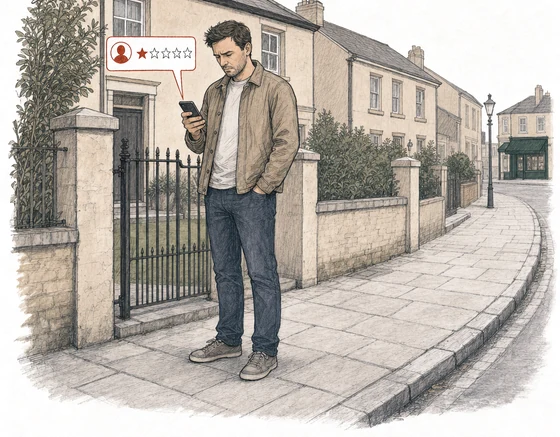
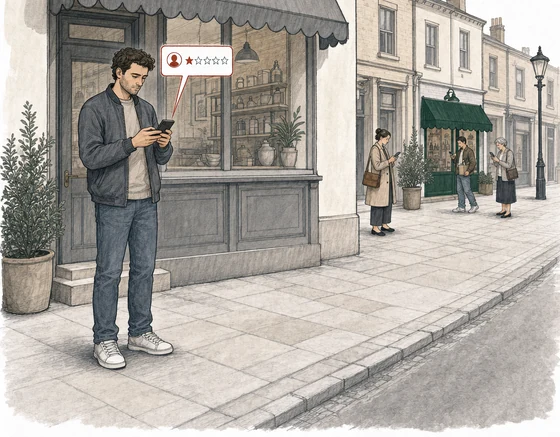
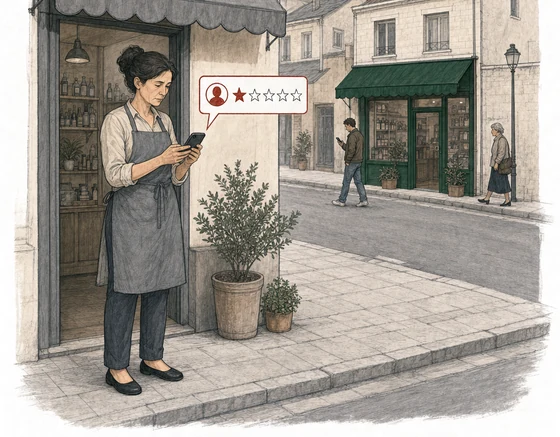
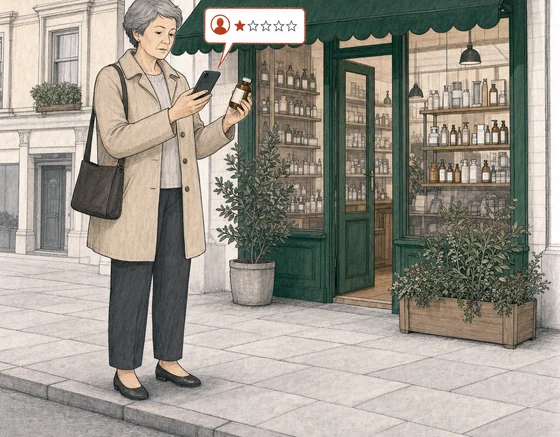
Illustration: a street with a small shop under a green awning; in its doorway a worker in the shop's green apron wears a phone headset. Four people post a one-star review from a phone. Three of the review cards are drawn in red and labelled with what the words do: Full name, a woman in a coat a step from the doorway; Face in a photo, a man holding his phone up to photograph the worker; Private detail, an older woman with a medical chart in a paper folder under her arm. At the far right, apart, an ordinary customer beside a plain white work van posts a one-star review drawn in plain gray, labelled Name is the business.
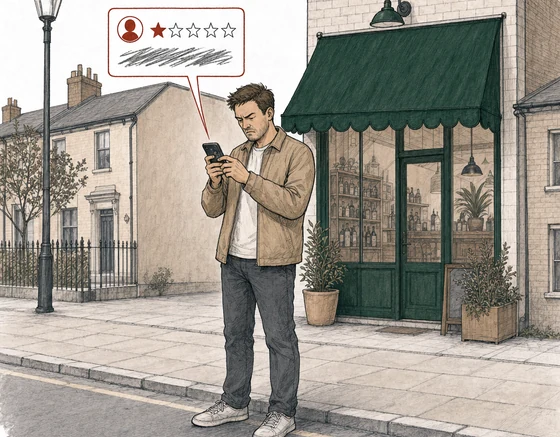
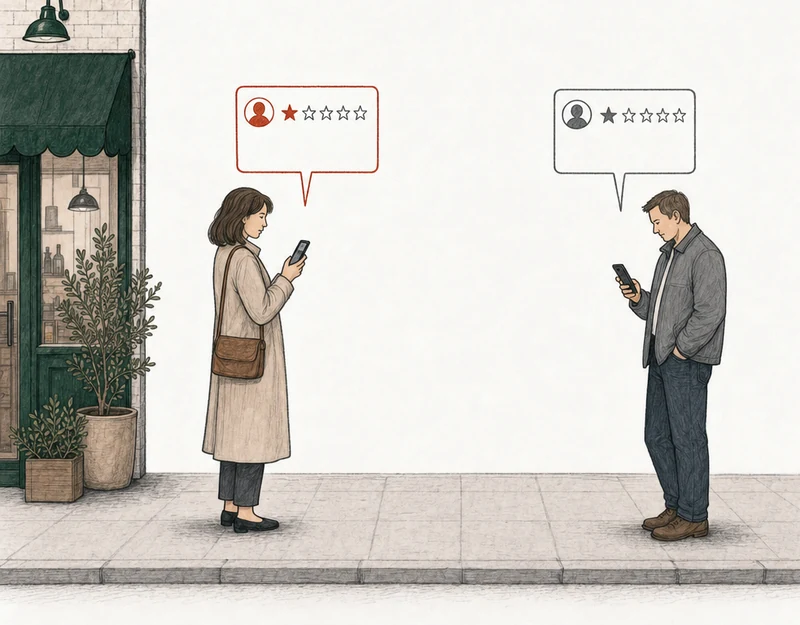
Illustration: two people on the pavement, each posting a one-star review from a phone. At the left, by the green-awning shop, a woman in a coat; her review card is drawn in red. At the right, apart from her, an ordinary customer; his review card is drawn in plain gray. Labels: Full name, Name is the business.

The policy reaches the three whose reviews name, picture, or expose a person who never agreed to be there. It doesn't reach the name that is the business.

Two people, two names. Google's clause lists a full name posted without that person's consent. It doesn't reach a name that is the business.

Personal information is Google's name for a person's details turning up in a review. It can be someone else's details or the writer's own. A full name. A face in a photo. An account number, a diagnosis. The test is consent, and your dispatcher never agreed to have where she lives posted in a stranger's one-star. The policy says nothing about how harsh a review is. A brutal review with no personal details in it is outside this policy, and whether Google keeps it depends on Google's other sections.

Two similar reviews. One breaks the policy.

Two one-star reviews, and each has a name in it. One names a dispatcher and then says where she lives. The other names the man whose name is on the truck.

Breaks the policy

Renee C.
Strong grounds for removal
★★★★sample

Called Tuesday about no heat and got nowhere. The dispatcher, Marissa Halloway, said someone would call back the same day, and nobody did. She lives on Alder Court, two doors from my sister, so she knew exactly who was sitting without heat. Two days without heat in February.

Personal informationFull namePrivate detail

Breaks it, because it posts where a staff member lives, and she never agreed to that. Her name alone, in a complaint about a phone call, wouldn't be enough in our read.

Doesn't break it

Ben T.
No grounds for removal
★★★★sample

Dale Whitcombe Plumbing. Dale showed up two hours late, cut out the old valve, went to get a part, and never came back. I paid for a finished job and I do not have one.

Does not coverName is the business

Doesn't break it. The name is the advertised business, and a contractor trading under his own name is the exact case Google carved out, so we'd tell you free that this policy doesn't reach it rather than spend your one appeal on it.

The policy

Personal information in plain terms

Don't post a person's personal information without their consent. That's the rule. Google's test is harm. Would this detail hurt the person it belongs to if it got out or got misused? That's what the policy is protecting. So there are two questions. Whose details are in the text, and did that person agree to be there. Nothing else in the review matters here.

Breaks the policy

  1. A woman a step from the shop's doorway posts a one-star review; in the doorway, a worker in the shop's green apron wearing a phone headset.

    Full name

    Another person's full name or last name, posted without their consent.

    "Your tech Brandon Alvarez is the one who broke it." That's a full name, the first thing Google's clause lists. Inside a complaint about the job, a name on its own isn't enough in our read. It takes something private next to it, like where he lives.

  2. A man outside the shop holds his phone up, photographing the employee in the green apron at the counter in the doorway, and posts a one-star review.

    Face in a photo

    A person's face in a photograph or a video.

    A picture of your front-desk staff attached to the review.

  3. An older woman across the street from the shop posts a one-star review, a medical chart in a paper folder under her arm.

    Private detail

    Financial, medical, or identification details about anyone.

    An account number or a diagnosis. The clause covers details about the writer as well as details about someone else.

  4. A customer at the open front door of his house, a plain white work van at the curb, posts a one-star review drawn in plain gray.

    Name is the business

    Does not cover

    Your own name when your name is the business, a public-facing professional working under their own name, and the business phone and email you publish yourself. A review that's only harsh is outside this section, and whether it stays up depends on Google's other sections.

Does yours break it?

What does not count as personal information?

Google carves out three things. A merchant can post its own business contact details. A name is allowed when it's part of the business's known or advertised name. And a name is allowed when the person is a public-facing professional working under their own name.

Google gives examples, and that's the only sorting it publishes. On the professional side it lists doctors, lawyers, realtors, financial planners, and contractors doing business under their own names. On the executive side it lists CEOs and other executives whose names and tie to the place are publicly known (Google Maps user-generated content policy). The list is open-ended. So if the person you have in mind falls between those examples, the text doesn't settle it, and we won't invent a line Google didn't print.

No grounds for removal

So if your name is the business name and a review names you, this policy doesn't reach it. That carve-out covers exactly your situation. We won't prepare an appeal on it. When there are no grounds, that's the answer. Also free. You get the reply playbook instead.

That's what the free Google review analysis is for, sorting which way each review goes before you spend anything. Google says the same on its reporting page. It asks owners not to report a review only because they disagree with it or don't like it, and it says it stays out of disputes between a business and its customers. Elsewhere in the same policy, under Offensive content, it allows a negative experience that is told respectfully.

A different policyOne boundary, because two of Google's rules mention staff names. In April 2026, practitioners on the Local Search Forum described a wave of removals. Reviews that named employees were among the ones hit. The thread doesn't say which policy Google applied. Separately, Google's Rating Manipulation section bars a merchant from asking staff to solicit reviews that identify a staff member. That rule is aimed at the business, not the reviewer. Personal information is the other rule. It's about a reviewer putting someone's details in a review without asking them.

Google's wording, unedited

The dispatcher's review trips the first clause, someone else's personal information posted without their consent. Google's definition, the medical and financial clause, the merchant allowance and both name carve-outs are in the extract.

Content which contains personal information of another posted without their consent such as: full name, or last name, their face in a photograph or a video, or other information which has been reported as having been posted without consent.

The rest of the extract

Do not distribute or post personal information without consent. Personal information is defined as information that applies to a living identifiable person and disclosure could result in risk of harm if it is compromised or misused. This includes:

Personally identifiable information and other personal information about yourself or others including financial information, medical information or personal identification information.

We do allow merchants to post contact information related to their business including phone, email, or social media handles.

We also allow

An individual’s name if it is part of the commonly known or advertised business entity

or

An individual’s name if they are a public-facing professional conducting business under their name.

This includes:

Doctors, lawyers, realtors, financial planners, contractors and others professionals doing business under their names

CEOs and other executive level employees whose names and professional connection to a place are publicly known and available

If you believe your personal information has been posted without your consent, please follow these instructions to flag the review.

Google, Maps user-generated content policy, Prohibited & restricted content, section Personal information

Google's policy text captured August 4, 2026. Section headings re-checked against the live page September 3, 2026.

Common questions

  • Can a review that names my employee be removed?

    Not on the name alone, in our read. Google's clause does list a full name posted without consent. But when a customer names the person they dealt with, inside an account of the visit, our analysis finds no grounds for removal. It changes when the review adds something private about that person, like where they live, a personal cell number, or a medical detail. Then the appeal quotes those words, names this clause, and says the person never agreed to have them posted.

  • What is doxxing, and is that this policy?

    Google's glossary defines doxxing as looking up private or identifying details about a specific person or organization and publishing them online, usually with intent to harm (Google Maps UGC Policy glossary). Google puts it under Harassment. A private detail posted without consent is this policy. The same detail published to put someone in harm's way is the other one.

  • A review named my customer's medical condition. Does that count?

    Yes, and the clause is explicit about it. Google's second bullet covers medical information about yourself or others, so it reaches a detail about the person writing as well as a detail about your customer.

File it yourself

How do you report a Google review for personal information?

As the owner, you report it from your own Business Profile. Google's policy ends with a line telling people to flag the review, and that line is written to the person whose information was posted. Open your profile, go to Read reviews, hit Report next to the review, pick a reason, and send it. The status shows up in the Reviews Management Tool.

  1. Open Read reviews

    In your Business Profile, find the review

  2. Select Report, pick a reason

    The pick can limit what the appeal may argue

  3. Send it, then wait

    Typically several days, Google says.

    Decision pending
  4. If it stays up, the appeal

    Report reviewed - no policy violation

    One per review, ever. You file it.

The report, then the appeal. Drawn by us, not a screenshot of Google.

The reason is the awkward part on this policy. Google documents two examples of what the review menu holds, Spam and Profanity, and nothing else. What it calls this one isn't published. When you see the list, pick the option closest to personal information. The two privacy-sounding options Google does document, Legal issue and Privacy concerns, are on a different form (Google Business Profile Help). That form reports a user's profile, and it only works on mobile (Report inappropriate user profiles). BrightLocal's removal guide says the closest match is fine at the report step. The appeal is where you have to be exact.

And there's a catch. When the report comes back as reviewed with no policy violation found, Google gives you a one-time appeal. That's it. One per review, ever. The appeal names a policy, and naming one that doesn't match your argument can waste the one appeal you have. So the filing is the whole job. On this policy, the appeal names Personal information and makes one argument. It quotes the exact words, shows they're a person's private details, like a home address or a financial, medical, or identification detail, and says that person never agreed to have them posted. Where the review names the person too, it shows neither of Google's name carve-outs fits. Our walkthrough of how to dispute a Google review covers the flag step, and appealing a denied Google review report covers the second one. You file the report from your Business Profile and the appeal in the Reviews Management Tool. We never submit anything to Google.

What evidence does a personal information report or appeal need?

Words, not attachments. The appeal is a free-text box with no upload field, so anything you have has to be written out in it.

BrightLocal's removal guide names this case directly: a staff member targeted by full name or last name. It adds the same exception Google makes when that name is part of your public branding. We read it more narrowly. A name alone, inside an ordinary account of the visit, usually isn't enough. It's the private detail next to it that carries the appeal. The argument is all yours.

What goes in the box

  • Quote the review's exact words rather than summarizing them.
  • Name the clause those words trip.
  • If the review names the person, say what their job is in one plain sentence, next to Google's published examples, so it's clear they work under the business's name and not their own.
  • Leave the emotion out, because the clause does the work and nothing else in the box does.

Practitioners who study removals count a medical detail in the review text among the clearest cases they see. That's their read, not a forecast about your review. Google decides.

Or have us analyze it

How do you check whether a review breaks Google's personal information policy?

Put in your business name and we'll analyze every bad review on the profile against Google's written review policies, not this one alone. We read reviews at 2★ and below that carry at least ten characters of text, and you get a verdict on each one: strong grounds for removal, possible grounds, or no grounds. About six in ten profiles we analyze have no review with grounds for removal. We say so plainly, with a reply playbook attached. The count is in the numbers, with their denominators, and you can read how the verdicts were tested. Where there are grounds, what the free analysis does walks through what we prepare and what you file. Nothing is behind a call.

No email. No account. The answer is free either way.

Each review comes back with one of three:

Strong grounds for removalPossible grounds for removalNo grounds for removal

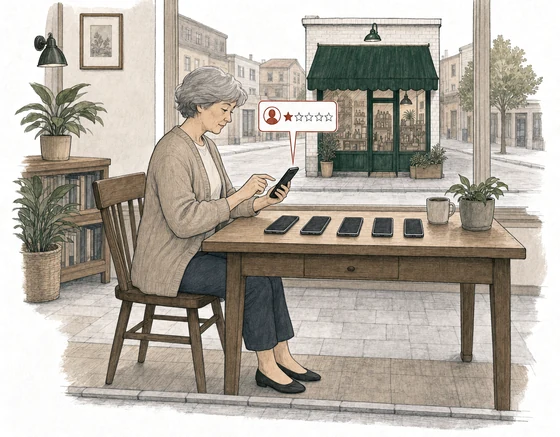
The shop owner sits at a table inside the shop after closing, reading her phone. Above the shop floats a row of six review cards: four with five gold stars, two one-star cards drawn in red.

Which other Google review policies could apply?

A review can break more than one section, and you only get to name one on the report. Where there's a threat, or private details published to make someone a target, Google's harassment policy argues better, and Google files doxxing there rather than here. Where the writer is posing as a real person instead of exposing one, that's impersonation in Google reviews. Where the words are there to offend, read Google's profanity policy. They sit side by side in Google's review policies, in Google's words, which is the place to compare them before you pick one.

RatingMinder