Google review policies/Obscenity & profanity

Google's review profanity policy. What counts, and what doesn't.

Reviewed by Doug Baker, founder · Updated September 23, 2026 · Policy text snapshot August 2026

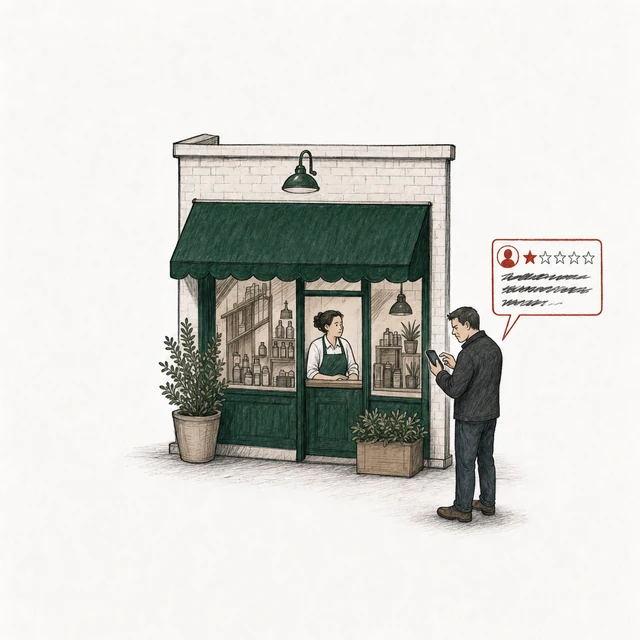
Illustration: a street with a small shop under a green awning, a worker in the green apron at the counter in its doorway. Three people post a one-star review from a phone. Two of the review cards are drawn in red with a harsh scribble where the words would be, and labelled with what the swearing does: Aimed at a person, a man in a dark jacket facing the worker at the doorway; Pushing the complaint harder, a man on a bench with a paper cup, checking his watch. At the far right, apart, an ordinary customer in a gray jacket with car keys posts a one-star review drawn in plain gray with neat lines for its words, labelled Angry, no swearing.
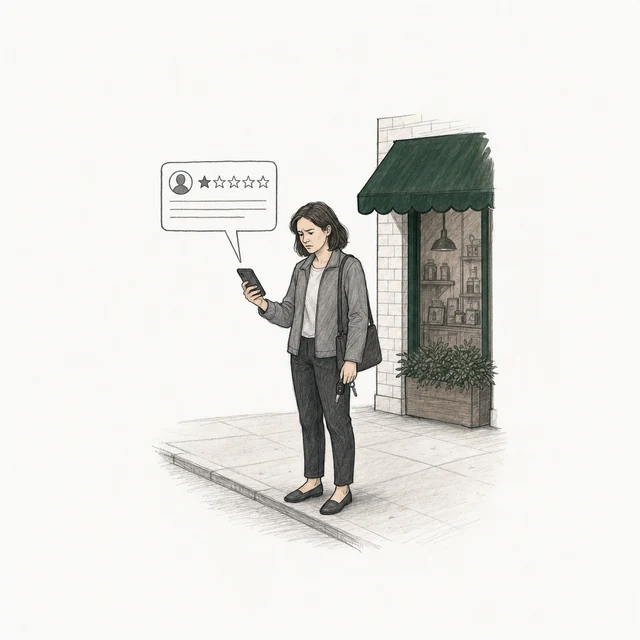
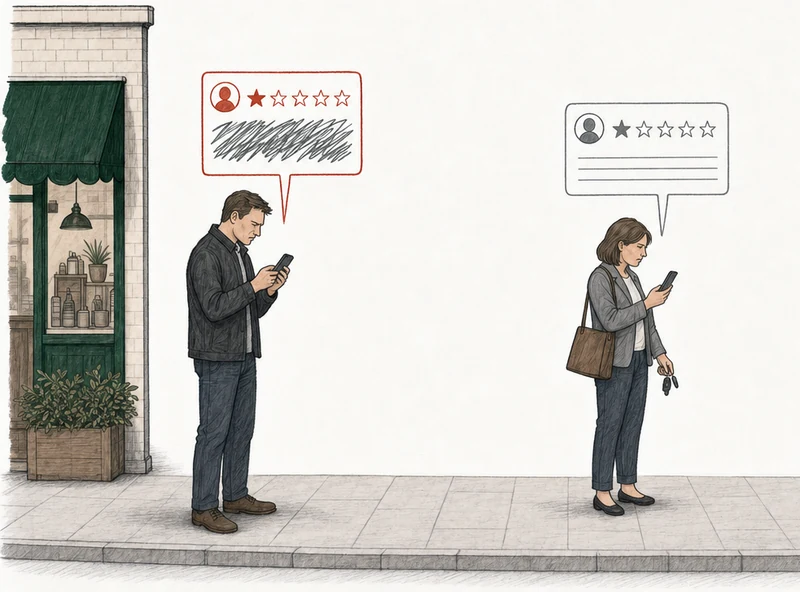
Illustration: two people on the pavement, each posting a one-star review from a phone. At the left, in front of the shop, a man in a dark jacket; his review card is drawn in red with a harsh scribble for its words. At the right, apart from him, an ordinary customer with car keys; her review card is drawn in plain gray. Labels: Aimed at a person, Angry, no swearing.

Google's words cover the two reviews that swear, one at a person and one about the wait. They don't reach the third, angry with no swearing in it.

Google's words cover the review on the left, which swears at a person while complaining. They don't reach the one on the right, angry with no swearing in it.

Google removes obscene and profane content from Maps. The rule is one line long, and it turns on what the swearing is doing, not on whether a word is there. Google names two jobs: language meant to offend other users, and language used to push a complaint harder. It allows the same words used inoffensively. So an angry review with no swearing in it doesn't break this policy.

Two similar reviews. One breaks the policy.

Same shop, same two stars, the same four-hour wait underneath. One swears. One doesn't. The word is masked here. In a real appeal you'd write it out in full, because the exact words are what you're pointing Google to.

Breaks the policy

Ray T.
Strong grounds for removal
★★★★★sample

Dropped the car off at 8 and they told me an hour. The wait was f---ing long, almost four hours, and nobody called me. When I finally asked, the f---ing guy at the counter told me to sit down. Brakes are fine now. Not coming back.

Obscenity & profanityPushing the complaint harderAimed at a person

Breaks it, twice over. The complaint under it is ordinary and honest, four hours and no phone call.

Doesn't break it

Joanne K.
No grounds for removal
★★★★★sample

Quoted me an hour and took most of the afternoon. Nobody picked up the phone when I called to check, twice. The work was fine and the price matched the estimate. The person at the front desk was short with me about it. I would not go back.

Does not coverAngry, no swearing

Doesn't break it. There is no profanity in it, mild or otherwise, so the exception Google makes for inoffensive uses never even comes up.

The policy

Obscenity & profanity in plain terms

The test is the job the word is doing in the sentence. Google names two jobs. One is swearing meant to offend other users. The other is swearing that pushes a complaint harder. Swearing at someone behind your counter is still part of a complaint, so we read it as the second job. Google doesn't say whether you and your staff count as the other users in the first. It allows inoffensive uses of words that would be profanity somewhere else. There's no list of banned words in the policy.

Breaks the policy

  1. A man in a dark jacket outside the shop's doorway, facing a worker in the green apron at the counter, posts a one-star review; the words on his review card are a harsh scribble.

    Aimed at a person

    Aimed at a person.

    "the f---ing guy at the counter told me to sit down."

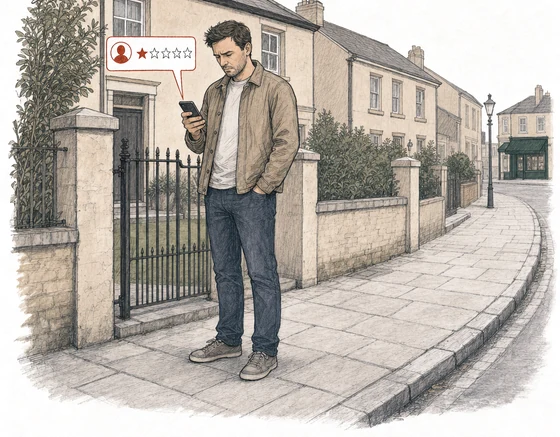
  2. A man on a bench beside the shop, a paper cup at his side, checks his watch while posting a one-star review; the words on his review card are a harsh scribble.

    Pushing the complaint harder

    Used to drive the complaint home.

    "the wait was f---ing long."

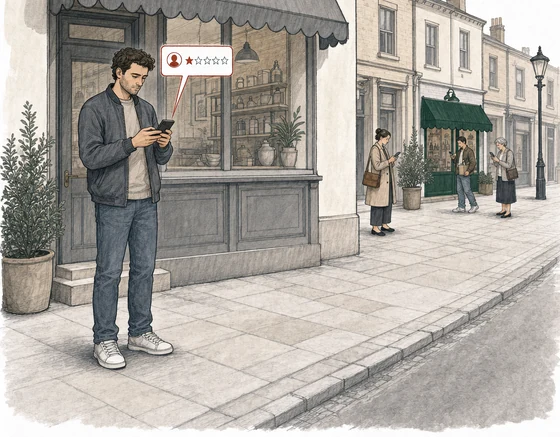
  3. A customer in a gray jacket, car keys in hand, posts a one-star review drawn in plain gray; the words on her review card are neat plain lines. The corner of the shop is behind her.

    Angry, no swearing

    Does not cover

    An angry, blunt review with no swearing in it. And a word used inoffensively, the kind that would only be profanity somewhere else. This policy doesn't reach those.

Does yours break it?

Is swearing for emphasis against Google's policy?

On the face of Google's text, yes. That reading is ours, not Google's, and Google decides every removal. Google's words cover profanity used to emphasize criticism. A review that swears while making an honest complaint is exactly what those words describe. The complaint underneath can be completely real and the policy still covers it.

What Google doesn't say is how far that goes once a person at Google reads it. On Google's own Business Profile forum, one hotel owner made exactly this argument about two reviews. Google declined to remove them, even after a Product Expert escalated it. So the reading holds up on paper, and it doesn't make the outcome certain. It's still an accurate description of what the review does. A report is that description and nothing more. It isn't a removal. Wondering about the other policies and not just this one? Start with whether a Google review has grounds for removal.

What does not count as obscenity or profanity?

An angry review with no swearing in it. That's the review this page exists for, and it breaks nothing. Google's exception here is about how a word is used, not how angry the review is. It allows inoffensive uses of words that would read as profanity somewhere else. So the question is whether the word was used inoffensively, not how mild it is.

Google answers that review in a different section of the same policy page. Under Offensive content, Google allows a negative experience as long as it's told with respect. Its reporting page puts it more bluntly. It tells owners not to report a review only because they disagree with it or don't like it, and it says Google stays out of disputes between a business and its customers.

A review that is offensive without swearing, or that goes after a protected characteristic, belongs to another section. Those are linked at the bottom of this page. A review that accuses you of something, with or without swearing, is a different question again. Our page on a defamatory Google review walks through Google's two routes for it.

No grounds for removal

So here's where we say no. An honest negative opinion with no profanity in it has no grounds for removal, and we won't prepare an appeal for one. When there are no grounds, that's the answer. Also free.

Google's wording, unedited

The one clause, with the two uses Google names. The section's opening line and its allowance for inoffensive uses are in the extract.

Content using profanity or obscenity to offend other users or emphasize criticism.

The rest of the extract

We will remove obscene and profane content on Google Maps.

This includes:

We do allow inoffensive uses of words that may be considered profanity in other contexts.

Google, Maps user-generated content policy, Prohibited & restricted content, section Obscenity & profanity

Google's policy text captured August 4, 2026. Section headings re-checked against the live page September 3, 2026.

Common questions

  • What counts as obscene in a Google review?

    There's no word list in the policy, and it isn't written around one. It's written around what the language does, which is offend other users or push a complaint harder. So the question about a word is what job it's doing in the sentence, not how bad the word is on its own.

  • Can a harsh review with no swearing be removed?

    Not under this policy. Google allows a negative experience told with respect, and its reporting page tells owners not to report a review they simply disagree with. Google doesn't remove reviews on "unfair." It removes them on policy.

  • What if the profanity is in the reviewer's name or photo, not the review?

    Different rule and a different form. Google's profile rules carry their own line against profile names and photos containing obscenity or profanity, and reporting a profile is a separate path that Google documents only for mobile, where you tap the user's name. If both apply, report both. You file both yourself.

File it yourself

How do you report a Google review for profanity?

You file it, from your own profile. Open your Business Profile, go to Read reviews, hit Report next to the review, pick a reason, and send it. Google's help page gives two example reasons, and Profanity is one of them. Spam is the other.

  1. Open Read reviews

    In your Business Profile, find the review

  2. Select Report, pick a reason

    The pick can limit what the appeal may argue

  3. Send it, then wait

    Typically several days, Google says.

    Decision pending
  4. If it stays up, the appeal

    Report reviewed - no policy violation

    One per review, ever. You file it.

The report, then the appeal. Drawn by us, not a screenshot of Google.

They're examples, though. Google doesn't publish the rest of the menu, and it doesn't say that picking Profanity on the menu is the same as reporting under the Obscenity & profanity section. So we won't tell you they're the same thing either. On timing, Google says only that evaluation usually takes several days. The status then shows up in the Reviews Management Tool.

Owners on Google's Business Profile community have reported profanity and seen the review stay up. In one thread, the normal report failed. A Product Expert on the forum escalated it and chased it twice, and the review came down about three weeks after the owner posted. In a second thread, the review was still up three months on. Those are a few owners' stories, not a measured rate. The rest of the report path is in disputing a Google review.

And there's a catch. If the report comes back without removal, Google gives you a one-time appeal. One appeal per review, ever. You name a policy category when you file the appeal, and a category that doesn't match your argument can waste the one appeal you have. For a profane review, the policy to name is Obscenity & profanity, and the argument is about the words, not the complaint. It points to the exact words and says which job they do, offending other users or pushing the criticism harder. Whether the review was fair stays out of it. We walk that through in appealing a denied Google review report. You file it. We never submit anything to Google.

What evidence does a profanity report or appeal need?

Words, not attachments. The report is a reason off a menu, and the appeal is a free-text box with no upload field, so whatever you have you have to write out in the box.

Three things matter.

  • First, point to the exact words instead of the whole review. That's BrightLocal's advice. "The review contains profanity" is your judgment. The words are the fact.
  • Second, if a word is only offensive when you know the local meaning, write out what it means. BrightLocal and TrueReview both note that regional slang and trade words may need spelling out for a moderator who may not be a native English speaker.
  • Third, say which of the two it is, meant to offend other users or pushing the complaint harder, instead of just calling it profanity.

Write it the way an unbiased third party would write it. Google removes some policy-violating content with automated models and sends the rest to trained operators (Maps user-generated content policy), so you are writing for both. BrightLocal says the F-bomb and other obvious obscenity usually get filtered out automatically, but words or idioms only some people or cultures find vulgar can be missed at first. Those are the ones where writing out the meaning helps.

Or have us analyze it

How do you check whether a review on your profile breaks this policy?

Put in your business name and we'll analyze every bad review on the profile against Google's written review policies, not this one alone. We read reviews at 2★ and below that carry at least ten characters of text, and each one comes back with a verdict: strong grounds for removal, possible grounds, or no grounds. Where there are grounds, we name the policy section they rest on. About six in ten profiles we analyze have no review with grounds for removal. We say so plainly, with a reply playbook attached. The count sits beside the pilot numbers we publish, and the method behind each verdict shows how we measured it. Where there are grounds, the free analysis, step by step shows what we prepare and what you file. Nothing is behind a call.

No email. No account. The answer is free either way.

Each review comes back with one of three:

Strong grounds for removalPossible grounds for removalNo grounds for removal

The shop owner sits at a table inside the shop after closing, reading her phone. Above the shop floats a row of six review cards: four with five gold stars, two one-star cards drawn in red.

Which other Google review policies could apply?

A review can break more than one section, so it's worth checking the neighbors too. If the words target a protected characteristic, read Google's hate speech policy as well. If the review is there to harass a person or a business, or calls for others to join in, Google's harassment policy may fit the text better. If it isn't about an experience at your business at all, it's one of the off-topic Google reviews. Insults with no profanity in them, and unsubstantiated allegations of criminal or unethical conduct, sit under Offensive content. What to do with a review that accuses you of a crime covers the allegations. You can read all of them side by side in Google's review policies, in Google's words.

RatingMinder