Google review policies/Off-topic

Google's Off-Topic review policy. What it covers, and what it doesn't.

Reviewed by Doug Baker, founder · Updated September 23, 2026 · Policy text snapshot August 2026

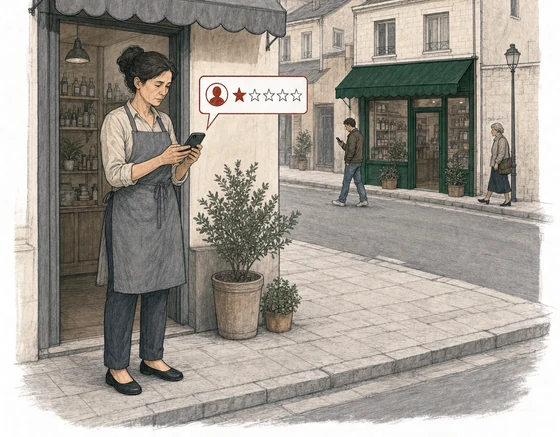
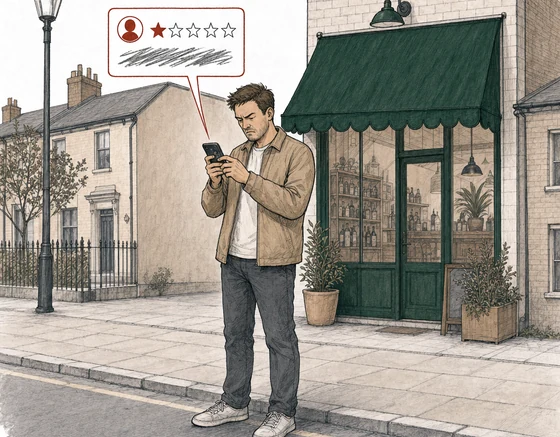
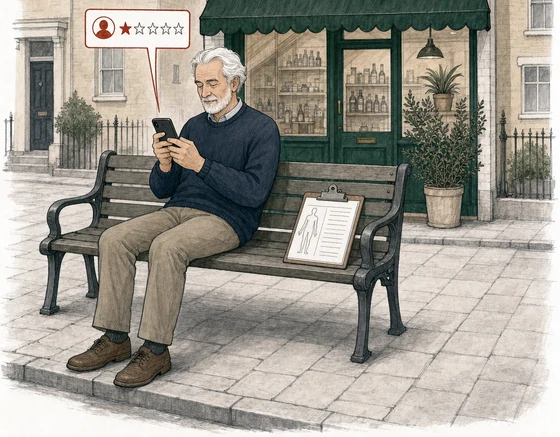
Illustration: a street with a small shop under a green awning, a house with a driveway at the left drawn in plain gray, and a smaller shop with a gray awning at the right. Five people post a one-star review from a phone. Four of the review cards are drawn in red and labelled with what the words describe: No experience described, a neighbor at the end of his driveway beside a white work van parked across it; Political or social rant, a man with a folded newspaper under one arm; Not your location, a woman with a takeaway coffee in front of the green-awning storefront; Told second-hand, a woman typing while her sister beside her talks, at the gray-awning shop. At the far right, apart, an ordinary customer with a shopping bag posts a one-star review drawn in plain gray, labelled Real visit.
Illustration: two people on the pavement, each posting a one-star review from a phone. At the left, a neighbor at the end of his driveway beside a white work van parked across it; his review card is drawn in red. At the right, apart from him, an ordinary customer with a shopping bag; his review card is drawn in plain gray. Labels: No experience described, Real visit.

Off-topic covers the four reviews that describe no experience at your location, the rant among them. It doesn't cover the customer who was actually there.

Off-topic covers the neighbor, whose review describes no experience at your location. It doesn't cover the customer who was actually there.

Off-topic is Google's name for a review that isn't about an experience at your business. A neighbor complaining about your van. A political rant with a star rating attached. A review of a different branch, or a different company altogether. That's what the policy covers. It says nothing about how harsh a review is, so a rough review from a real customer isn't off-topic. If a policy covers that review, it's a different one.

Two similar reviews. One breaks the policy.

Same plumbing company, same week. One of them never gets to the work.

Breaks the policy

Dave
Possible grounds for removal
★★★★sample

One of their vans came down my street at twice the limit this morning, then sat across the end of my driveway for the better part of an hour. This whole trade is a racket and the outfits running it are why nothing in this country works anymore.

Off-topicNo experience describedPolitical or social rant

Breaks it, because a van parked across a driveway isn't an experience at your location, and the last sentence is general and political commentary. Appeals like this sometimes succeed, not usually.

Doesn't break it

Renee
No grounds for removal
★★★★★sample

Booked a morning slot and the tech got here after four. He was polite and stopped the leak, but it started again the following week and I paid someone else to redo it. Not what I expected for the price.

Does not coverReal visit

Doesn't break it. A booked appointment, a long wait, a repair that didn't hold.

The policy

Off-topic in plain terms

A review has to be about the reviewer's own experience at the place they're reviewing, and it can't be general commentary, politics, social issues, or a personal rant. Those are the two tests. Google's whole off-topic section is two sentences. 31 words. No section of Google's content policy is shorter except the advertising rule. If the text describes no visit, no purchase, and no service, or it carries politics or a rant, this policy covers it, and Google removes reviews that break it.

Breaks the policy

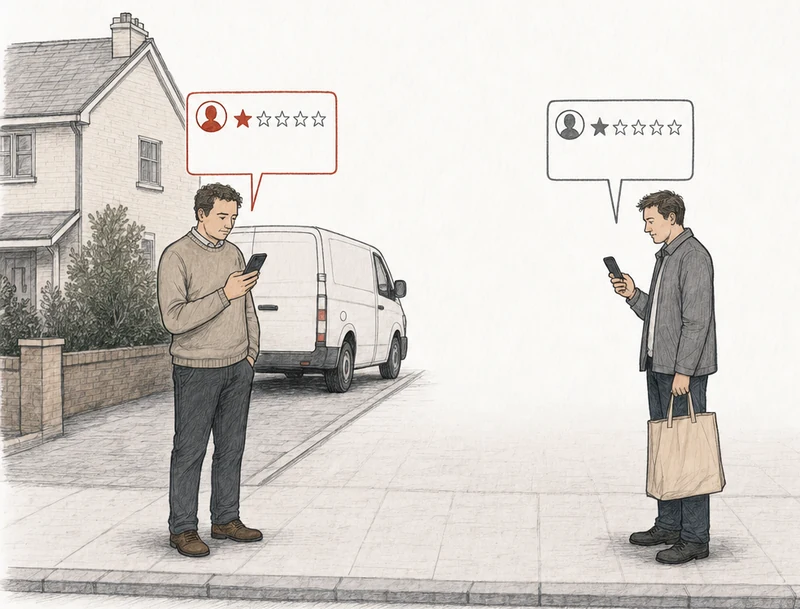
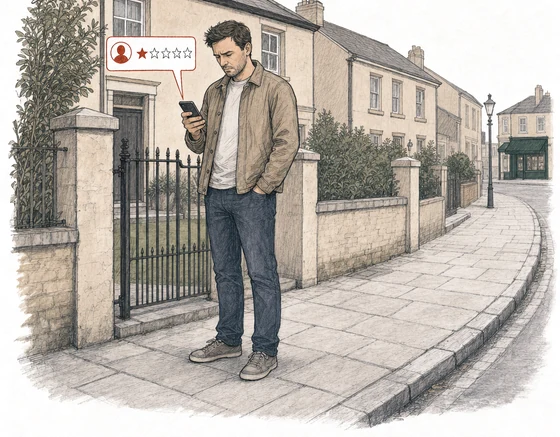
  1. A neighbor at the end of his driveway, a white work van parked across it, posts a one-star review; the corner of the shop is down the street behind him.

    No experience described

    Nothing in it happened at your business.

    "Never used them. Their van sat across the end of my driveway for an hour."

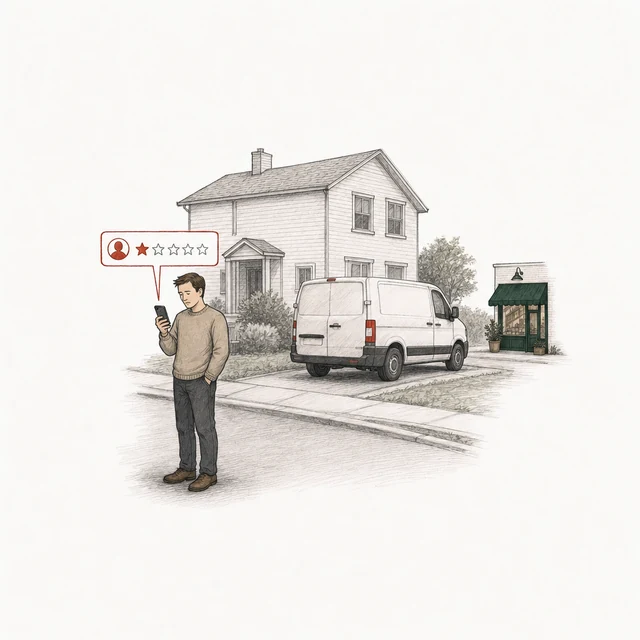
  2. A man on a street corner with a folded newspaper under one arm posts a one-star review; the shop is far down the street behind him.

    Political or social rant

    A political or social rant with a star rating on it.

    The text is about the trade, an election, or something in the news, and never about the work you did.

  3. A woman with a takeaway coffee in the doorway of a different shop with a gray awning posts a one-star review; the green-awning shop is across the street.

    Not your location

    It's about a different business or a different branch.

    Google's clause is "at a specific location," and the location in the review isn't yours.

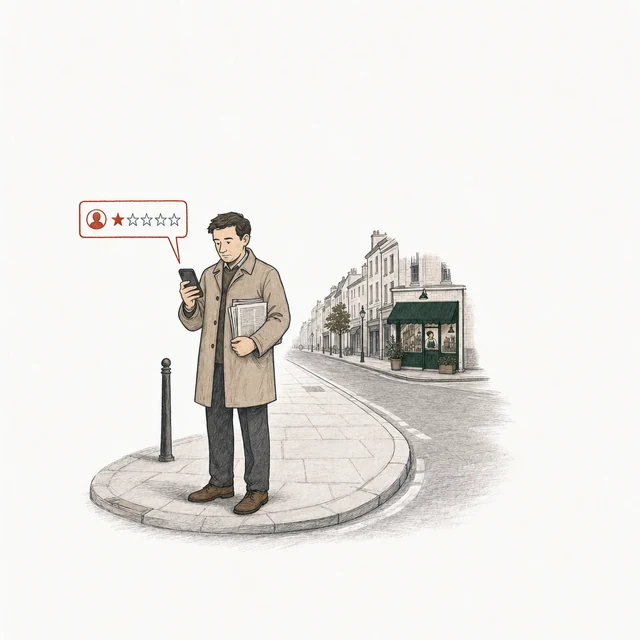
  4. Outside the shop, a woman posts a one-star review while her sister beside her talks, one hand raised, holding no phone.

    Told second-hand

    Somebody else's visit, told second-hand.

    "My sister went and said the place was filthy." The writer wasn't there, and Google's glossary ties a genuine experience to the person who had it.

  5. A customer at the open front door of a house, a bucket on the step at her feet, posts a one-star review, drawn in plain gray.

    Real visit

    Does not cover

    A real customer describing a real visit, however harshly, with no politics or rant in it. Off-topic doesn't cover those.

Does yours break it?

What does not count as off-topic?

Most of what arrives here. A harsh review of a real visit is not off-topic, no matter how unfair it reads.

Neither is a complaint about price, a long wait, or a job that didn't turn out, even on work you think went fine. All of them describe an experience at your location, which is exactly what the policy asks for. So the first question is whether the review breaks any policy at all, and can a Google review be removed walks through that from the top.

Two other Google lines fit here. Under Offensive content, Google allows a negative experience told respectfully. And its reporting page tells owners not to flag a review only because they disagree with it, and says Google stays out of disputes between businesses and their customers.

There's one more we turn down, and owners are surprised by it. A one-line review with no detail in it at all, like "absolute joke," is arguable as off-topic, because nothing in it describes an experience. We still say no. The argument is thin, you get one appeal per review, and spending it there costs more than the review does. We tested that call against the reviews we've adjudicated before we made it a rule. How the pilot was measured is written up.

No grounds for removal

When there are no grounds, that's the answer. Also free.

Google's wording, unedited

The experience clause first. The second sentence, on commentary and rants, is in the rest of the extract.

Only post content that is based on your experience or questions about experiences at a specific location.

The rest of the extract

We don’t allow content which contains general, political, or social commentary or personal rants.

Google, Maps user-generated content policy, Prohibited & restricted content, section Off-topic

Google's policy text captured August 4, 2026. Section headings re-checked against the live page September 3, 2026.

Those two sentences are the entire section, and Google also names off-topic reviews among the content that violates its policy on its enforcement page.

Common questions

  • Is a review from someone who was never a customer off-topic?

    Not by itself. Being a non-customer is not a policy violation, and an appeal built on that alone asks Google to enforce a rule it doesn't have. The clause that reaches it is the experience one. If the text describes no visit to your location, it's off-topic. Where your records show no such transaction, that's an argument for fake engagement instead, and it needs evidence about the review itself.

  • Are political comments allowed in a Google review?

    No. Google's second sentence bars general, political, and social commentary and personal rants. It applies to any review that has them in it. Google doesn't make an exception for a review that also describes a real visit.

  • What if a review is off-topic and something else too?

    Name the section your appeal can argue best and file on that. BrightLocal's guide reports more success when a review breaks more than one policy, so check for a second one before you pick. You get one category and one appeal, so that choice is the whole decision.

File it yourself

How do you report a Google review as off-topic?

Open your Business Profile, go to Read reviews, hit Report next to the review, pick a reason, and send it. The status shows up in the Reviews Management Tool, and Google says evaluation typically takes several days. That's the only timeline Google publishes for a report. The longer walk-through is how to dispute a Google review.

  1. Open Read reviews

    In your Business Profile, find the review

  2. Select Report, pick a reason

    The pick can limit what the appeal may argue

  3. Send it, then wait

    Typically several days, Google says.

    Decision pending
  4. If it stays up, the appeal

    Report reviewed - no policy violation

    One per review, ever. You file it.

The report, then the appeal. Drawn by us, not a screenshot of Google.

Picking the reason is where it gets unclear. Google publishes two example reasons, Spam and Profanity, and doesn't publish the full list, so you only see the options when you open the menu. A Local Search Forum thread from June 2025 records one called "Low quality information," with the note "Review is off-topic, contains ads, or is gibberish or repetitive." The people in that thread saw different options depending on which Google account they used. So look for the reason that mentions off-topic, and don't count on it being worded the same way on your screen.

And there's a catch. Google gives you the one-time Google review appeal. One appeal per review, ever. The appeal names a policy category, so a category that doesn't match your argument can waste the one appeal you have.

An off-topic appeal argues one of Google's two sentences. Either the words describe no experience at your location, or they're politics or a rant. If your real argument is that the visit never happened, that's a different category, fake engagement. You file it from your own profile. We never submit anything to Google.

What evidence does an off-topic appeal need?

Words, not attachments. The appeal is a free-text box with no upload field, so whatever you have has to be written out in it.

What goes in the box

  • Quote the exact words that break the policy, not the whole review. BrightLocal gives that advice for rambling and gibberish reviews, and it holds here too.
  • Then say what those words describe instead of a visit, and name the policy sentence the review fails.
  • Don't argue that the review is unfair. TrueReview says that argument loses, and it tells owners to say what their records show about the transaction instead.
  • If the review is about another branch or another company, say so and point at the words that give it away.

The categoryWhitespark recommends off-topic as the default category for a negative review. We don't. Google judges the appeal against the category you picked in the first report, and an appeal that argues something else is fighting uphill. TrueReview makes that point, and BrightLocal says the closest category is fine for the first report but not for the appeal. So pick the category your appeal will actually argue.

Or have us analyze it

How do you check whether a review breaks Google's off-topic policy?

Put in your business name and we'll analyze every bad review on the profile against every Google policy we cover, not just off-topic. We read reviews at 2★ and below that carry at least ten characters of text, and you get a verdict on each one: strong grounds for removal, possible grounds, or no grounds. About six in ten profiles we analyze have no review with grounds for removal. We say so plainly, with a reply playbook attached. The count is in the numbers, with their denominators, and you can read how the verdicts were tested. That's worth knowing before you file anything, because it keeps your one appeal for a review that can use it. Where there are grounds, what the free analysis covers walks through what we prepare and what you file. Nothing is behind a call.

No email. No account. The answer is free either way.

Each review comes back with one of three:

Strong grounds for removalPossible grounds for removalNo grounds for removal

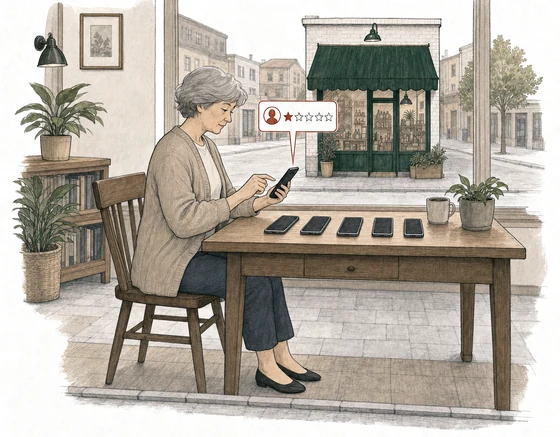
The shop owner sits at a table inside the shop after closing, reading her phone. Above the shop floats a row of six review cards: four with five gold stars, two one-star cards drawn in red.

Which other Google review policies could apply?

Off-topic often isn't the strongest policy to argue. Promotional text, a phone number, or the same review posted over and over makes spam in Google reviews the better argument. If you can show the visit never happened at all, that's Google's fake engagement policy, which covers content not based on a real experience. Off the subject and never happened are two different claims, and they argue differently. A competitor, a current or former employee, or a relative writing the review is Google's conflict-of-interest clause, which names the relationship outright. All ten of the categories these pages cover sit in the Google review policy index.

RatingMinder